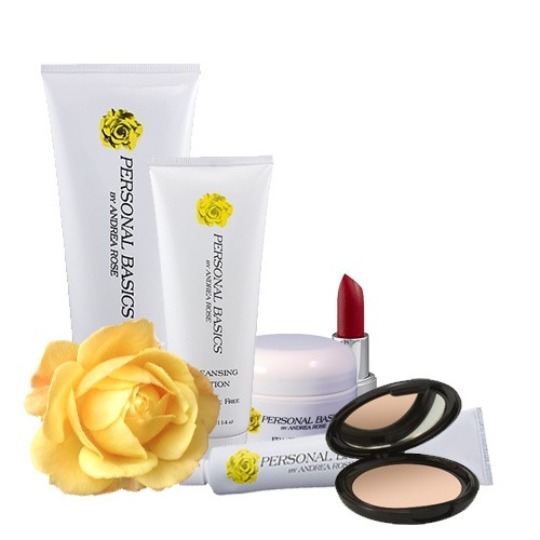
It has been 10 years since I embarked on the guaifenesin protocol and
with
great pride I can now say to you that I have totally reversed this
disease.
It took time and effort and a great deal of persistence but here I am
today
with literally no pain and no fatigue! I owe my life to Dr St
Amand and
intend to use my knowledge of what it takes to get through this to help
as
many of you as possible who still suffer as I once did.
Please do not hesitate to call me with any questions you may have about
this
protocol or simply to ask my advice on any of the salicylate free
products I
offer in my line. After all, I developed this company to help you!
Don't ever give this up. Stay the course and you too will one day
get your
life back just as I have gotten mine.
Andrea Rose had been suffering with fibromyalgia
for many years before becoming a patient of Dr. R. Paul St. Amand, M.D.
She began his treatment protocol on the medicine Guaifenesin in July of
1996, and is now doing very well.
Totally dedicated to her healing, she is always
searching for ways to support the Guaifenesin process. The most
challenging task she has found was in trying to find salicylate free
skin care products and cosmetics that did not block the treatment.
Out of the dilemma, her company, Personal
Basics by Andrea Rose, was born.
At Personal Basics by Andrea
Rose, you will find all of your needs met for the guaifenesin
protocol. I developed this company in 1997 after many months on the
Guaifenesin treatment protocol as a patient of Dr. R. Paul St.
Amand. It was explained to me that in order to be successful with this
protocol one cannot absorb any salicylates into the pores of the skin
because they will "block" the medication from doing its job. Since all
plants make salicylates and we are living in an age of "natural"
products, this end of the protocol became very difficult. Cosmetic
companies use plant oils and extracts in just about all of their
products today, so it became necessary to read the label of everything
I wanted to purchase to ensure I knew what every ingredient was before
I could use it. This is very difficult to do, especially when you're
not feeling well.
After several months of trying to
accomplish this I decided I needed to do something about the problem.
So, after speaking with Dr. St. Amand I began researching how I could
start my own company that would be totally "Salicylate Free".
Because of my prior training in Skin Care and Cosmetics, which I had
cultivated while working at Patricia Stevens Modeling and Finishing
School in Chicago, I set out on this venture with pure excitement and
enthusiasm! When using my products, patients
would no longer have to read labels or worry that something they did
not catch or understand would slip by them. Patients would now be able
to concentrate on doing the protocol and getting well.
My products are developed by chemists
who are well versed on the salicylate issue. Other than the powdered
make-up products I have in my line, the vitamins, and deodorant, all
others are custom formulas and are developed strictly for PERSONAL
BASICS. Dr St Amand checks every ingredient before the products are
produced so they are and always will be "safe". Since I too have this
disease and will have to use these products for the rest of "my" life,
you can be sure that I will always adhere to the highest standards
possible in creating them and you can feel secure in knowing that they
will always be free of salicylates. The products are FRAGRANCE FREE
as well for those who are sensitive to fragrances. Although there are
other companies who now offer salicylate free products, I truly feel
that what I have are the best quality one can find and, with my
products, a little goes a long way!
If you are about to embark on the
Guaifenesin Protocol please understand that if you read labels on over
the counter products it is very easy to make a mistake. It is also
important that you understand that companies change ingredients
constantly but many times keep the packaging exactly the same.
Throughout the last 11 years I have gotten calls and still do from
people who were going to give this protocol up because they did not
feel they were getting better. They were convinced that they had read
all labels correctly and that the guai was not working for them. Upon
questioning them on "every" product they were using along with them
reading the ingredient lists to me, 9 out of 10 times I discovered a
salicylate!
This part of the protocol is just as
important as taking the guaifenesin so please take advantage of the
Peronal Basics products. It will save your precious energy so that you
can concentrate on getting well!
Information for my clients about HYPOALLERGENIC
COSMETICS from:
US Food and Drug Administration
Center for Food Safety and Applied Nutrition
Office of Cosmetics and Colors Fact Sheet
December 19, 1994; revised October 18, 2000
"Hypoallergenic cosmetics are
products that
manufacturers claim produce fewer allergic reactions than other
cosmetic products. Consumers with hypersensitive skin, and even those
with "normal" skin, may be led to believe that these products will be
gentler to their skin than non-hypoallergenic cosmetics."
"There are no Federal standards or
definitions that
govern the use of the term "hypoallergenic." The term means whatever a
particular
company wants it to mean. Manufacturers of cosmetics labeled as
hypoallergenic are not required to submit substantiation of their
hypoallergenicity claims to the FDA".
"The term "hypoallergenic" may have
considerable market value on a retail basis, but dermatologists say it
has very little meaning."
Cosemetic Safety Information
from:
US Food and Drug Administration
FDA Consumer
November, 1991; revised May, 1995
Allergic Reactions
"Do the preservatives (in cosmetics)
pose any safety risk?"
"According to a study of cosmetic
reactions conducted by
the North American Contact Dermatitis Groups, preservatives are the
second most common
cause of allergic and irritant reactions to cosmetics. Fragrances are
number one. Although
the study is more than 10 years old, the results can still be
considered valid today, says Harold R. Minus, M.D., an associate
professor of dermatology at Howard University Hospital.
(for More information on this study, see "Cosmetic Allergies" in the
November, 1986 FDA
Consumer."
"People who have had allergic
reactions to cosmetics may try hypoallergenic or allergy-tested
products. These are, however, only a partial solution for
some and no solution at all for others."
"'Hypoallergenic can mean almost
anything to anybody,' says
Bailey."
"'Hypo' means 'less than,' and
hypoallergenic means only
that the manufacturer feels that the product is less likely than others
to cause an allergic reaction.
Although some manufacturers do clinical testing, others may simply omit
perfumes or other common
problem-causing ingredients. But there are no regulatory standards on
what constitutes hypoallergenic."
"Likewise, label claims that a
product is 'dermatologist-tested,' 'sensitivity tested,' 'allergy
tested,' or 'nonirritating' carry no guarantee that it won't cause
reactions."
Safety Testing
"Whether driven by altruism,
liability, or the bottom line, most companies see the need for safety
testing. But
safety testing can rarely be mentioned without bringing up the
controversy surrounding the use of animals for those tests."
"Many companies have begun to label
their products with statements indicating that no animals have been
used in testing."
"'As far as we know,' says Neil
Wilcox, D.V..M., director of FDA's Office of Animal Care and Use, 'what
these companies do is use, for the most part, old reliable ingredients
that have proven safe (based on past animal data and a history of safe
use) and then test the final
product on people.'"
"'There's kind of a fine point here,;
says CTFA's McEwen. 'These companies that say they don't test on
animals are skirting the issue.
Practically every ingredient that's used in cosmetics was at some point
tested on animals. Probably
a statement like 'no new animal testing; would be more accurate'"
"Besides never putting on makeup
while driving, consumers
should follow other precautions to protect themselves and the quality
of their cosmetics."
"* Keep makeup containers tightly
closed except when in use."
"* Keep makeup out of sunlight; light
can degrade preservatives."
"* Don't use eye cosmetics if you
have an eye infections, such as conjunctivitis, and throw away all
products you were using when you first discovered the infection."
"* Never add any liquid to bring the
product back to its original
consistency. Adding water or, even worse, salvia could introduce
bacteria that could easily grow
out of control. 'If it has lost its original texture and consistency,'
says McEwen, 'the preservatives
have probably broken down.'"
"* Never share."
"* Throw makeup away if the color
changes or an odor develops. Preservatives
can degrade over time and may no longer be able to fight bacteria."
"'We don't have a hard and fast rule
on (when to throw cosmetics out),' says
says McEwen. McEwen says makeup can be kept indefinitely as long as it
looks and smells all right
and the consistency doesn't change. 'It would be difficult to have any
kind of bacterial growth and
not have it noticeable,' he explains."
"However, Janice Teal, a
microbiologist who heads the product and package
safety divisions of Avon Products, Inc. disagrees. 'Even after the
preservatives have stopped working, you may not be able to see or smell
anything different,' she says."
"She agrees with McEwen that there is
no absolute date for discarding various
various products, but says Avon recommends that consumers throw mascara
away after three months. They can keep
other makeup products a few months longer."
"'Mascara is our biggest concern
because of the wand,' she says. 'Normally, the eye is a good barrier to
bacteria, but one slip and that wand can scratch the cornea
and introduce all kinds of bacteria.'"
Skin Cancer Foundation and Sun
Protection Information
Information for my clients about Year-Round
Sun Protection taken from:
Skin Cancer Foundation website, www.skincancer.org,
December 29, 2005
Year-Round Sun Protection
Even during the frigid days of
winter it is important to remember sun protection for outdoor
activities. Reflections from the snow can more than double your danger
from the sun’s harmful UV rays. Also, both snow and strong wind reduce
the effectiveness of sunscreen.
Your are probably in the habit of packing sunscreen for a day at the
beach or pool. But the sun is up there 365 days a year, and you need
protection much of that time to reduce your lifetime sun-exposure
total. Everyday exposure counts; you do not have to be actively
sunbathing to get a damaging does of the sun. Practice these
sun-protection basics all year round to give your skin the best chance
of long-term health:
Limit time in the sun,
regardless
of the hour or season.
Avoid unnecessary sun exposure,
especially during the sun’s peak hours: 10 AM to 4 PM.
Keep track of the time you spend in
full sunlight; do not stay in an unshaded spot for long stretches of
time.
Use a
sunscreen of SPF 15 or
higher whenever you spend time outdoors.
Choose a sunscreen with ingredients that block
both UVB and UVA rays.
Apply liberally and evenly to all exposed skin.
The average adult in a bathing suit should use approximately one ounce
of sunscreen per application. Not using enough will effectively reduce
the product’s SPF and the protection you get.
Be sure to cover often-missed spots: lips, ears, around eyes, neck, and
scalp if hair is thinning, hands and feet.
Cover Up.
Be aware, however, that sunlight bouncing off
reflective surfaces can reach you even beneath an umbrella or a tree.
Seek the shade.
Never seek a tan.
There is no such thing as a healthy tan. A tan
is the skin’s response to the sun’s damaging rays.
Stay away from tanning parlors
and artificial tanning devices.
It's Not the Heat...
Temperature is not a good indication
of how damaging the sun is. You can get a powerful dose of ultraviolet
radiation even when the usual “heat” signals are weak. Consider this:
Clouds and Haze. Though
clouds keep much of the sun’s heat (infrared radiation) from reaching
the earth, they block as little as 20% of the harmful UV radiation.
Anyone who has gotten a sunburn on a hazy day can attest to that. If
you plan to be outdoors when it is overcast, cover up and apply
sunscreen to all exposed skin.
Latitude. The closer to the
equator you are, the more potent the sun’s rays. That is because they
hit the earth more directly for a greater part of the year. This
accounts for the higher skin cancer rates in the “Sun Belt.” People who
live or vacation in southern latitudes should be especially aware of
the need for sun protection.
Altitude. Altitude.
Ultraviolet radiation increases 4%-5% with every 1000 feet above sea
level. Skiers, hikers, and those living at high elevations need
four-season protection.
Reflection.Water, sand,
concrete, and snow are highly reflective surfaces, bouncing back as
much as 90% of the sun’s rays upwards and sideways.